WHAT YOU CALL DOUBT HAS ANOTHER NAME
You are not in doubt. You are in flight. And while you deliberate, the only life you have is already happening — without your real presence. Read this with courage. –
By Marcello de Souza
There is a kind of intelligence that turns against the very person who possesses it.
Not because it is weak. Quite the opposite — because it is sophisticated enough to build, with architectural precision, the most elaborate reasons for not acting. For not deciding. For not committing to anything that truly demands the full presence of who one is.
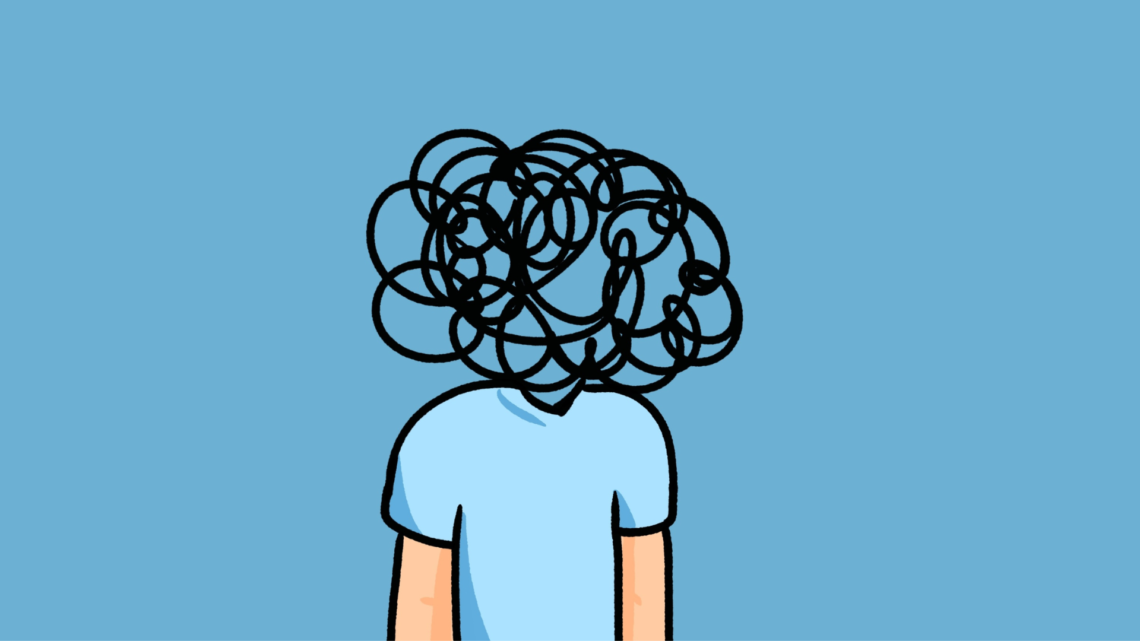
This intelligence never stops. It analyzes, questions, weighs, compares, reconsiders. It produces doubts with the same fluency that others produce answers. And every doubt it generates seems legitimate — because it is formulated with competence, sustained by real arguments, coated in an appearance of depth that deflects any external questioning.
Those who look from the outside see someone who thinks deeply before acting.
Those who feel from the inside know — or should know — that this is not what is happening.
What lives inside, when doubt becomes the permanent state of a life, is not thought. It is shelter. It is the safe place discovered by someone who learned, at a moment not yet fully conscious, that staying in the question is infinitely less costly than exposing oneself to the answer. That deliberating indefinitely is a way of never being wrong — because whoever does not decide has nothing to regret. That doubt, when cultivated with enough care, functions as a shield as efficient as it is invisible: it protects from everything, including life itself.
The problem — and this is the point where the analysis must be merciless — is that life does not know you are thinking.
It does not wait. It does not pause. It does not reserve a space for when you finally feel ready. It simply happens. In the present. At this exact instant. And while you build another layer of reasoning to justify the wait, it moves forward — with or without your conscious participation.
This is not metaphor. It is the most concrete structure of human existence: the time that passes while you deliberate is time that has been lived. Not a draft. Not a suspension. Life. Real. That does not return.
The Dangerous Elegance of Not Committing
There is a distinction that is rarely made — and that, when finally made, changes the way one reads one’s own story.
The distinction between genuine doubt and functional doubt.
Genuine doubt emerges in the face of real unknowns. In the face of a decision involving variables impossible to calculate. In the face of something no previous experience sufficiently illuminates. It has a deadline. It moves. It seeks information, tests hypotheses, and at some point — even without absolute certainty — resolves itself into a choice.
Functional doubt is something else entirely. It does not seek resolution. It seeks perpetuation. It is not a symptom of someone who does not know — it is a strategy of someone who does not want to bear the cost of knowing. Because knowing implies acting. Acting implies failing. Failing implies being seen failing. And for someone who grew up learning that failure is a form of disappointment — of others, of oneself — permanent doubt is the only place where identity can exist without risking itself.
This distinction matters because it reveals something uncomfortable: chronic doubt is not an absence of clarity. It is the choice not to use the clarity that already exists.
And that clarity exists. It is there. It survives every layer of argument deposited over it. Sometimes it whispers. Sometimes it screams in silence. Sometimes it appears at three in the morning, when the noise stops and thought has nowhere left to run. And then, at dawn, it is buried again — not for lack of courage, but from an excess of habit.
The habit of not trusting oneself as the source of one’s own answers.
The habit, built over years, of searching outside — in parents, in expectations, in voices that installed themselves before any conscious reflection — for the legitimacy of each choice. As if life were something one must ask permission to live.
The Weight of What Was Never Chosen
There is a suffering that has no name in conventional diagnoses. It is not depression — because it functions. It is not anxiety — because it does not completely paralyze. It is not burnout — because it has not reached the visible limit.
It is the silent suffering of those who live in suspension. Of those who wake each day with the diffuse sensation that real life begins later — after deciding, after gaining clarity, after resolving this last doubt that, curiously, always generates another.
This suffering has texture. It has weight. It manifests in the difficulty of being entirely present anywhere — because one part is always in the hypothetical future, comparing options, calculating risks, anticipating regrets. It manifests in the subtle irritation toward those who seem certain, who act without guarantees, who have chosen and move forward — not because those people are better, but because their existence silently questions the paralysis of the one watching.
It also manifests — and this is what hurts with the most precision — in the relationship one establishes with time.
Time, for someone living in chronic doubt, is not a resource. It is an accusation. Each year that passes without life having truly begun carries within it a charge that is never named but is always felt — in the form of a low, constant anxiety; of a restlessness that no amount of scrolling resolves; of a growing sensation that something is being lost without being able to identify exactly what.
What is being lost is the present. Not the present as concept. As concrete reality.
The only place where any choice can be made is now. Not in the past — which no longer exists as an arena for action. Not in the future — which is, by definition, a projection of the mind, not an inhabitable territory. Now. This moment. This consciousness. This body that exists and ages and never returns to the point where it stands at this very instant.
And while the mind deliberates, now passes.
What Intelligence Hides When It Turns Too Far Inward
There is something no one says about above-average intelligence: it is, simultaneously, the greatest resource and the greatest risk a person can carry.
A resource because it expands perception, refines analysis, allows one to see nuances where others see only surface.
A risk because that same capacity can be captured — entirely, without one noticing — in service of self-preservation. And when that happens, when intelligence folds inward and begins working not for the expansion of life but for its protection, the result is a trap of rare elegance: the person becomes the most competent builder of reasons why it is still not time to act.
Every argument is valid. Every doubt is real. Every identified risk genuinely exists. And the sum of all this produces a coherent, sophisticated, apparently reasonable narrative — one that justifies immobility with a precision that no external argument can easily dismantle.
This is not intellectual weakness. It is exactly the opposite. It is intelligence operating in survival mode — protecting the ego from exposure, shielding identity from the risk of revealing itself and not being enough, preserving the status of someone who has not yet tried and therefore has not yet failed.
The problem is that this survival mode extracts a price that only appears with time: the life that was never lived because of an excess of calculation.
No calculation is precise enough to eliminate the risk of living. No analysis can guarantee that the choice made will be the right one. No wait is long enough for certainty to appear on its own — because certainty, in most choices that matter, does not precede action. It emerges from it. It is built by it. It exists on the other side, not on this side.
Whoever waits for certainty before acting will wait their entire life. Because the certainty sought before acting is not certainty — it is a guarantee. And guarantees, in real life, do not exist for those willing to live in earnest.
The Digital World and the Art of Postponing Without Appearing To
There is a contemporary detail that must be named with the same honesty with which everything else is named.
The digital world — with its infinite supply of stimulation, its capacity to fill every second of silence, its constant promise that there is always something more relevant to consume before turning back to oneself — is the most efficient environment civilization has ever produced for those who need not to think.
Not because the content is necessarily empty. But because the constant movement from one screen to another, from one video to the next, from a notification to a response and from that response to the next stimulus, creates an occupation that resembles presence but is, most of the time, organized absence.
The mind that cannot be with itself has found in the digital universe its most sophisticated habitat. There, it is never necessary to stop. It is never necessary to sit with the discomfort of one’s own silence. It is never necessary to hear what the inner life is trying to say — because there is always something from the outside making more noise.
And the cruelest aspect of this mechanism is that it does not feel like flight. It feels like staying current. It feels like connection. It feels as though one is present in the world while, in reality, one is absent from oneself.
Hours pass. Days pass. And at the end, the feeling is not one of rest or enrichment — it is that vague and unsatisfied lightness of someone who consumed much and found nothing of what was truly needed.
Because what was needed was not on the screen. It was inside. And no screen delivers that.
Time spent in the digital world, when used as systematic escape, is not neutral time. It is time that could have been dedicated to building — the career, the projects, the relationships, the life that still exists only as possibility because no one went toward it and made it real.
This is not judgment. It is arithmetic.
The Choice No One Can Make for You — That Was Already Being Made Without You Knowing
There is a truth that chronic doubt conceals with particular efficiency: not deciding is a decision.
Remaining in suspension is a choice. Not an absence of choice — an active choice, made each day upon waking and repeating the same pattern. The choice not to commit. Not to expose oneself. Not to assume authorship of one’s own life.
And this choice carries consequences as real as any other. Only its consequences are slower, more silent, more difficult to trace — because they do not appear all at once, but accumulate in imperceptible layers, until one day one looks at one’s life and realizes it was built by omission.
Not by what was decided. By what was postponed.
There is a question that, when asked with genuine honesty, leaves no elegant exit. It is not a question about the past — about what was lost or what went wrong. It is a question about the present. About now. About what is being done, at this exact moment of existence, with the only life available to be lived.
If this life — with these choices, with these postponements, with this relationship one has with one’s own time — were to be repeated exactly as it is, forever, without possible alteration: would you choose this?
Not as punishment. As a mirror.
Because if the answer is no — if something in that question tightens, unsettles, ignites a dissatisfaction you recognize but preferred not to name — then that discomfort is not a problem. It is data. It is the most honest information one’s own consciousness can offer.
And information, unlike doubt, is not meant to be contemplated. It is meant to be used.
What Changes When You Stop Asking Permission to Exist
There is a moment — and whoever has passed through it recognizes it with a clarity that needs no words — when life stops being something that happens and begins to be something that is built.
It is not a dramatic moment. It is not a revelation. It is something simpler and more radical at the same time: it is the instant when one stops searching outside for the authorization of what one already knows inside.
Because the dependence on external approval — from parents, from expectations, from voices that installed themselves in childhood and continue operating in adult life with the same authority they carried when they were recorded — is not a weakness of character. It is the result of learning. Of a conditioning that, at some point, made sense as a strategy of emotional survival.
The problem is that survival strategies do not automatically transform into life strategies. They need to be reviewed. They need to be questioned with the same intelligence used to question everything else. And they need, at some point, to be replaced by something that did not exist when they were created: trust in one’s own capacity to be the source of one’s own answers.
This does not mean absolute independence. It does not mean disregarding those one loves or what was learned from those who came before. It means recognizing that there is a fundamental difference between listening and obeying. Between considering and submitting. Between loving someone and transferring to that person the responsibility of deciding who one is and what one wants from life.
Identity is not inheritance. It is construction. And no construction happens without someone assuming authorship of what is being built.
The question is not what others expect. The question is what this life, this consciousness, this being that exists now and will never exist in exactly this way again — what all of this asks for.
And that question has only one place where it can be answered: inside.
When Life Stops Being a Draft
What prevents most people from truly living is not a lack of conditions. It is the lack of a decision that life has already begun.
There is a belief — rarely verbalized, deeply rooted — that real life is at some future point. That the present is provisional. That when everything has been resolved, when the doubt has passed, when clarity finally arrives, only then can existence truly begin.
But that future point never arrives — because it is always reconstructed. When one doubt resolves, another takes its place. When one obstacle is overcome, the next is already visible on the horizon. The provisional life does not end because problems are solved. It ends when one decides it is no longer provisional.
This is, simultaneously, the simplest and the most difficult decision that exists.
Simple because it requires no external condition. It does not depend on approval. It does not wait for the right moment. It is an internal, silent decision that does not need to be announced to anyone — only assumed by oneself.
Difficult because it demands abandoning the protection that provisionality offers. While life is a draft, it cannot be judged as a finished work. While it is under construction, it does not need to be presented. Provisionality is a shield as comfortable as it is invisible — and renouncing it means accepting that what is being built now is real, carries real consequences, and is the real responsibility of whoever is building it.
This is the courage that no course teaches. That does not develop from reading about it. That only exists when one acts from it — even without guarantee, even with fear, even without the certainty that will never arrive before the choice.
The present is not a rehearsal. It never was.
And the life you are living right now — with all the doubts, with all the postponements, with all the intelligence employed in service of waiting — is already the life. Not the preparation for it.
It already is.
If you have reached this point and something tightened — if there was a moment when this text touched something you recognize but preferred not to name — know that this tightening is not passing discomfort.
It is your own consciousness telling you that it already knows what needs to be done.
And it is saying so now. Not later.
On my blog, you will find hundreds of publications on cognitive behavioral development, conscious human relationships, and the life that is built when one stops asking permission to live it. Texts that do not simplify what is complex — because you deserve nothing less than the real depth of the questions you carry.
Visit: marcellodesouza.com.br
#existence #selfawareness #cognitivedevelopment #humanbehavior #philosophyoflife #presence #identity #consciousliving #choices #courage #psychology #mind #time #consciousness #personaldevelopment #marcellodesouza #marcellodesouzaoficial #coachingevoce
Marcello de Souza | Coaching & Você
marcellodesouza.com.br
© All rights reserved
Se isso fez sentido para você, existe um próximo passo possível
Algumas reflexões não terminam no conteúdo — elas continuam em forma de diálogo, aprofundamento ou sustentação de um trabalho contínuo.


LO QUE LLAMAS DUDA TIENE OTRO NOMBRE
Você pode gostar

FORMING HABITS: THE MYTH OF 21 DAYS AND THE REAL PATH TO PERSONAL AND PROFESSIONAL TRANSFORMATION

THE SELF THAT SAVED YOU NOW WANTS TO KILL YOU