WE CUT THE ROOTS AND DEMAND FRUIT: THE PARADOX OF LEADERSHIP THAT MAKES INNOVATION IMPOSSIBLE
An invisible violence is taking place in contemporary organizations—a violence so normalized that we no longer even recognize it as such. It is not the explicit violence of physical exploitation or direct coercion. It is something subtler, deeper, more disturbing: the progressive expropriation of the human capacity to inhabit complex mental states. What we are witnessing is not merely work overload—it is the systematic dissolution of inner experience itself as a legitimate territory of professional existence.
Consider this: when was the last time, in an organizational context, you truly experienced being fully present in your own thinking? Not merely processing information, not merely reacting to demands, not merely executing automated mental protocols—but genuinely inhabiting the complexity of your own consciousness, with its nuances, its ambiguities, its layers of meaning that reveal themselves only when there is time and space for them to unfold?
For most people, this question sounds almost absurd. Not because the answer is difficult, but because the very question seems out of place, inadequate, almost impertinent in the context of modern work. And that is precisely where the problem lies: we have normalized a form of professional existence in which the depth of mental experience has been implicitly declared irrelevant, replaced by a superficial, accelerated, and fragmented version of cognition that we euphemistically call “productivity.”
What has happened is not merely a change in working methods. It was a silent anthropological transformation in the very nature of human presence within organizations. We have created environments in which inner experience—that dimension of consciousness where genuine insights emerge, where deep understanding is formed, where non-obvious connections are established between seemingly distant phenomena—has been systematically delegitimized, pushed outside working hours, treated as a personal luxury rather than a critical organizational resource.
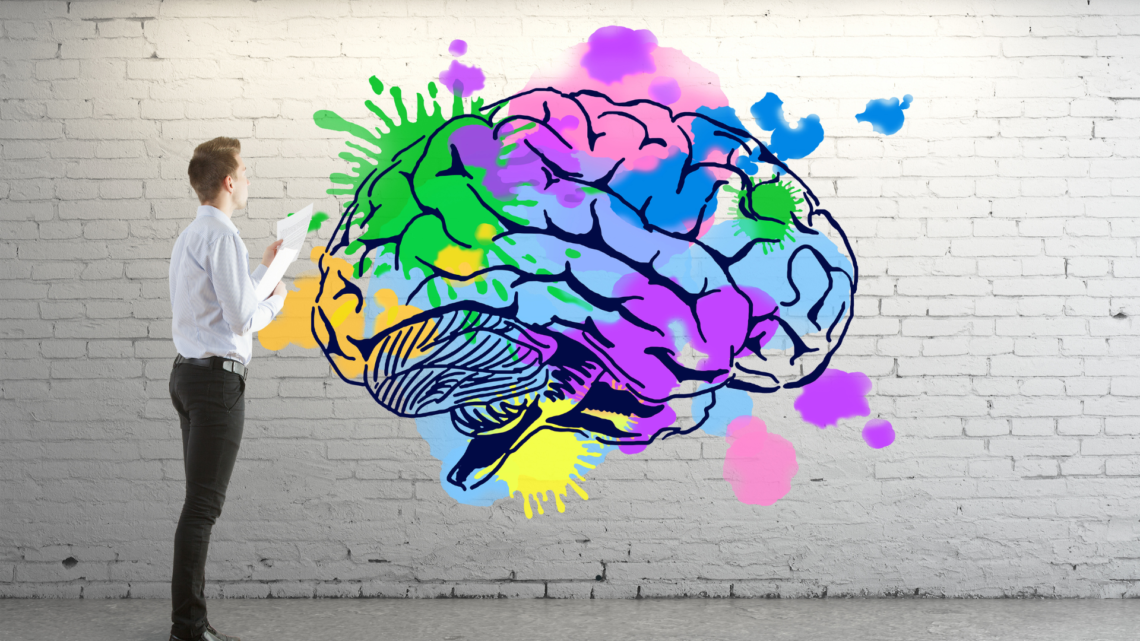
And here lies the cruel paradox: the more organizations depend on innovation, adaptability, and strategic intelligence—qualities that emerge exclusively from complex and deep mental states—the more they structure environments that make precisely those states impossible. It is as if we were demanding that people produce fruit from trees whose roots we have systematically cut.
The issue is not the volume of work. Many historical periods have known intense, demanding, physically exhausting labor. But there was something fundamentally different: there was rhythm. There was alternation between effort and rest, between action and contemplation, between doing and being. Corporate modernity has eliminated that alternation—not out of functional necessity, but because of an implicit ideology that equates human value with constant availability, that confuses presence with reactive readiness, that treats consciousness as an infinitely exploitable resource with no need for regeneration.
The result is a peculiar form of alienation—not the classic alienation of the worker from the product of their labor, but something more insidious: the alienation of the individual from their own cognitive experience. People stop recognizing their own mental states, lose the vocabulary to describe the difference between deep thinking and superficial processing, between understanding and merely categorizing, between perceiving and merely registering.
We have created an organizational culture in which the mind has become colonized territory—not by an external invader, but by an internalized logic that has become so naturalized that it seems inevitable. A logic that says: every pause is waste, every reflection that does not generate immediate action is indulgence, every mental state not oriented toward tangible results is irrelevant. And in this colonization, we lose not only efficiency—we lose the very capacity to access forms of intelligence that do not fit within the paradigm of perpetual urgency.
There is a radical difference between a constantly occupied mind and a genuinely engaged mind. The occupied mind jumps from stimulus to stimulus, from demand to demand, accumulating processed tasks but rarely transforming them into understanding. The engaged mind, on the other hand, dives in, lingers, allows thought to unfold in its own temporalities, recognizes that some forms of understanding require maturation, cannot be accelerated, do not respond to arbitrary deadlines.
Contemporary organizations privilege the occupied mind and penalize the engaged mind. Not explicitly, of course—no one announces “here we only value superficiality.” But the signs are everywhere: in open-plan architectures that make deep concentration impossible, in meeting structures that fragment the day into cognitively useless blocks, in the culture of immediate response that treats any delay as failure, in performance metrics that count outputs but ignore the quality of the mental processes that generated them.
And here is something rarely discussed: this way of operating does not merely exhaust—it deforms. When the mind is trained, day after day, year after year, to function only in reactive mode, it begins to lose the ability to operate otherwise. The capacity for sustained attention atrophies. Tolerance for ambiguity decreases. The ability to remain with a complex question without immediately jumping to a simplified solution weakens. Not because people become less intelligent, but because intelligence, like any human capacity, is shaped by the environments in which it is exercised.
We are literally creating generations of professionals neurologically adapted to superficiality—not due to individual deficiency, but by environmental design. And when these people try to access deeper forms of thinking, they cannot. Not for lack of will, but because the necessary neural circuits have been systematically underdeveloped by environments that never demanded them, never valued them, never created conditions for their development.
There is something profoundly tragic in this. Because the capacity to think deeply is not a luxury—it is an existential necessity. It is what allows us not only to solve problems, but to understand the meaning of the problems we are solving. It is what allows us not only to make decisions, but to grasp the ethical, relational, and systemic implications of those decisions. It is what allows us not only to function, but to inhabit our own lives with some degree of awareness and intentionality.
When organizations expropriate this capacity, they are not merely reducing productivity—they are ontologically impoverishing people. They are creating forms of professional existence in which individuals become functionally efficient yet existentially impoverished, where they execute tasks yet lose contact with the meaning of what they are doing, where they accumulate results yet progressively distance themselves from the very experience of being alive and conscious.
And it is not only individuals who suffer. Entire organizations begin to operate at this diminished frequency. Strategic decisions are made on the basis of quickly processed data, but without the deep integration that allows emergent patterns to be perceived. Innovations are pursued through methodologies that promise creativity in sprints, ignoring that genuine creativity does not respond to timers. Leadership is developed through measurable competencies, leaving out precisely those qualities—discernment, practical wisdom, the ability to hold paradoxes—that only emerge from mental states the organizational culture has made inaccessible.
What we are living through is not merely a crisis of time management or productivity techniques. It is a crisis in our relationship with consciousness itself. It is the question no one is asking: what kind of mental experience are we collectively producing? And more importantly: what kind of mental experience are we collectively making impossible?
Because there are forms of intelligence that only emerge from silence. There are understandings that only reveal themselves when the mind is not constantly being interrupted. There are connections that only form when there is space for thought to wander, explore, discover unplanned paths. And all of this is being systematically eliminated from organizational environments that confuse control with efficiency, speed with intelligence, constant occupation with value.
The central question is not “how to think better at work.” The question is: why have we collectively accepted that work must be structured in a way that makes real thinking impossible? Why have we naturalized environments that treat human consciousness as an unlimited resource, ignoring that it has rhythms, limits, and specific needs to function at its potential? Why have we built cultures in which admitting that you need time to think sounds like weakness rather than basic professional responsibility?
And even more disturbing: why have we resigned ourselves to this? Why do millions of people wake up every day knowing they will spend eight, ten, twelve hours in mental states that are, at best, superficial and, at worst, alienating—and accept this as the normal condition of professional life?
Perhaps because the alternative requires something structurally difficult in contemporary organizations: it requires slowing down in a culture that equates speed with value. It requires creating empty spaces in a culture that treats every emptiness as waste. It requires recognizing that some of the most valuable cognitive functions—perception of complex patterns, integration of divergent perspectives, discernment of relational nuances—cannot be accelerated, cannot be outsourced, cannot be replaced by algorithms or frameworks.
But perhaps the most difficult thing of all is this: it requires organizations to admit that the way they are structured does not merely tire people—it impoverishes people. It does not merely reduce productivity—it reduces humanity. It does not merely generate inefficiencies—it generates a form of professional existence that is fundamentally beneath what human beings are capable of when given adequate conditions to think, feel, perceive, and create.
The necessary transformation is not technical. It is philosophical. It is not about implementing new time-management tools, but about radically questioning what we understand by well-used time. It is not about adding breaks to the calendar, but about rethinking why the calendar became the central organizer of human experience. It is not about teaching people to focus better, but about creating environments in which different forms of consciousness—including the unfocused, the divergent, the apparently unproductive—are recognized as essential.
Because in the end, what is at stake is not only organizational performance. It is the preservation of the human capacity to inhabit complex mental states, to keep inner experience alive as a legitimate dimension of existence, to resist the reduction of consciousness to a mere instrument for processing external demands. It is the refusal to accept that professional life must be synonymous with cognitive impoverishment. It is the insistence that it is possible—and necessary—to create ways of organizing human work that do not treat the depth of mental experience as an obstacle to efficiency, but as the very condition for any efficiency worth having.
And if there is hope, it lies precisely here: in the recognition that the way we think is neither biological destiny nor economic necessity, but cultural construction. And every cultural construction can be deconstructed, rethought, redesigned. But that requires courage—the courage to admit that what we have normalized may be profoundly wrong. The courage to imagine that another way exists. The courage to begin building it, even when everything around us insists that urgency does not allow it.
#marcellodesouza #marcellodesouzaoficial #coachingevoce
Did this text stir something in you? Visit my blog, where I keep hundreds of publications exploring the deepest dimensions of human and organizational cognitive-behavioral development and conscious human relationships. A space dedicated to those who refuse ready-made answers and seek to think for themselves.
Se isso fez sentido para você, existe um próximo passo possível
Algumas reflexões não terminam no conteúdo — elas continuam em forma de diálogo, aprofundamento ou sustentação de um trabalho contínuo.

Você pode gostar

WHY EMOTIONS SHAPE OUR DEEPEST CHOICES

THE TRUTH THAT TRANSFORMS: HOW TO FACE REALITY TO EVOLVE
