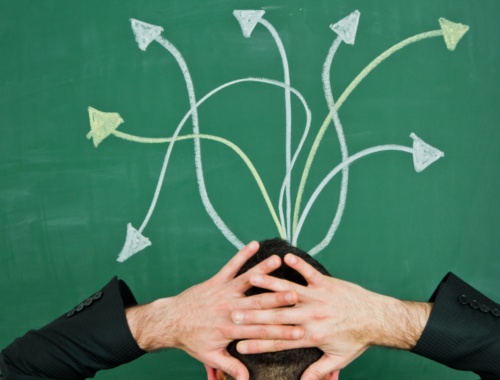
CONSCIOUSNESS WITHOUT A BODY IS PSYCHOPATHY: THE SILENT VIOLENCE OF ORGANIZATIONS AND DAMASIO’S LEGACY
“Discover why the inhuman logic of many companies makes them less intelligent and adaptable than a simple bacterium.”
There is a structural psychopathy underway — and it inhabits not only individuals, but entire systems. Corporately disguised as “professionalism,” it manifests whenever feeling is banished from thinking, whenever the body is treated as noise, and emotional life is seen as an obstacle to efficiency.
It is the triumph of a consciousness without a body: an intelligence amputated, devoid of affection, homeostasis, and embodied wisdom.
We live in the era of dissected corporate minds: brains floating in air-conditioned meeting rooms, deciding fates without registering empathy, fear, or compassion.
It is violence that does not shout — but resonates in the bodies that fall ill, in the absences that multiply, in the silences that weigh heavily.
Organizations have become disembodied cognitive systems: they process, decide, calculate… but they do not feel.
When feeling is extinguished, the human is reduced to function — and function, to performance.
Damasio gave us the civilizational key to understanding this collapse: consciousness arises from the body, not the other way around.
There is no mind without physiology, no decision without emotion. Every act of thinking emerges from a complex ecology of sensations, impulses, and somatic markers — the intelligence that maintains life in balance.
Ignoring the body is not just a strategic error: it is rejecting the most intelligent part of ourselves.
And when organizations ignore their sensitive dimension, they not only lose vitality — they become sick, less intelligent than bacteria, unable to perceive threats to their own survival.
This text is both an invitation — and a denunciation.
An invitation to reintegrate feeling into thinking, the body into consciousness, neuroscience into philosophy.
And a denunciation against the silent violence of cultures that amputate life in the name of rationality.
If Damasio taught us anything, it is that reason without emotion is a functionally dangerous illusion.
And in organizations, this illusion carries a human, ethical, and evolutionary cost.
Relearning to feel is therefore more than an act of humanity — it is a survival strategy.
It’s Not Just About Damasio
This text does not merely cite Antonio Damasio — it radicalizes him. Here, embodied consciousness is a philosophical-scientific provocation, an invitation to feel the real life that runs from a multinational meeting room to the intimacy of a meaningful conversation.
How many decisions have you witnessed made as if executives were brains floating in glass tanks? The air in the meeting room is not neutral: it carries visceral fear, accumulated tension, silent grief, untold stories. Every diverted gaze, every empty chair, every tense silence is an ignored homeostatic signal — signals that Damasio shows are essential to consciousness.
Ignoring this is not “management error.” It is violence against the life pulsating in every present body. It assumes that the intelligence of millions of years of evolution — encapsulated in feelings and homeostatic instincts — can be ignored without consequences.
When CEOs announce restructurings based solely on “objective data” and “rational analyses,” they are not being professional. They are operating with limited intelligence, disconnected from the embodied wisdom that allowed life to persist for billions of years.
The shock that few admit: many contemporary organizations are less intelligent than bacteria. Yes, bacteria — unicellular organisms that feel, adjust, seek what nourishes, and avoid what destroys, without a manual, SWOT analysis, or management consultancy. They feel. And us? We repeat strategies that drain vitality, ignoring turnover, mental illness, and disengagement, until collapse is not only possible but inevitable.
Close your eyes for a moment. Imagine seeing these “corporate bacteria” before it is too late. It is not a metaphor: it is the chance to perceive the living organism your organization should be and the embodied intelligence you carry — even if you may not know how to access it.
Implicit Intelligence: Leadership Beyond Cognitivism
There is a dimension of leadership rarely explored: the ability to operate through implicit intelligence. It is not about accumulating data, titles, or techniques; it is the skill of feeling life in motion — within yourself, your team, and the organization. Spinoza, whom Damasio reveres, spoke of conatus not as an abstract concept, but as the force to persevere in being — something not learned in MBAs, but awakened by perceiving the body in action, subtle tensions, the living signals that precede speech and decision.
Imagine a leader who, before presenting metrics or critical decisions, pauses to feel the team’s emotional temperature. Not as a “psychological” exercise, but as genuine perception: tension in the shoulders, diverted glances, silence loaded with meaning. This is not mysticism; it is pure neuroscience. Damasio shows that the prefrontal cortex, linked to rationality, is always in tune with limbic and brainstem structures, where somatic markers reside — bodily signals that anticipate choices, decisions, and risks.
Before getting lost in spreadsheets or reports, ask yourself: have you felt how your team’s body reacts to what you propose? Have you noticed how microexpressions, tonal variations, and breathing patterns anticipate problems or opportunities before a single word is spoken? Ignoring this is not mere negligence — it is amputating the intelligence that keeps the organization alive. And the most fascinating part: this wisdom is already in front of us, waiting only to be perceived. The simple act of observing with embodied attention reveals layers of information that no dashboard or statistical analysis can capture.
The Drama of Existence
Damasio uses the metaphor of a tightrope walker: life is the constant maintenance of a delicate balance, where the smallest deviation can be fatal. And what if we apply this idea to human relationships? Every interaction becomes an act of homeostatic tightrope walking, in which two or more embodied consciousnesses simultaneously strive to preserve their own vital balance while co-regulating the shared system.
We do not possess bodies as objects; we are bodies in situation, always interpreting and being interpreted. When a team or a couple achieves “harmony,” what we call empathy or concord is, in reality, homeostatic synchronization — respiration, heart rate, hormonal patterns, shared attention. Studies prove this in functional MRI, but we don’t need a laboratory to notice: genuine attention, embodied presence, is enough.
Have you ever noticed how a gaze, a gesture, or a silence instantly alters the dynamics of a meeting or intimate conversation? Or how your own posture, breathing, and energy can change the course of a dialogue? This is not theory; it is practice we already know, waiting to be activated with consciousness. Those who observe perceive that the implicit intelligence of interaction speaks first, and those who ignore this language are literally losing the game before it even begins.
The Organizational Mirror and the Critique of AI
Damasio warns us of an error few dare face: contemporary AI does not feel. It has no body, no somatic markers, no homeostatic cost — it only processes information. And if we look at many organizations, we see a troubling reflection of this limitation. They process data, maximize outputs, but do not perceive the real impact of their decisions on the bodies and minds sustaining their operation.
Spinoza might call this lack of authentic conatus: structures that do not seek to preserve their vitality, only to perpetuate themselves. Think of companies that maintain toxic cultures because temporary financial indicators satisfy shareholders, while their human capital — the source of long-term innovation and resilience — silently degrades.
What if we could create sentient organizations? Not machines with simulated feelings, but collective human systems that perceive, feel, and react to their own homeostatic states. Imagine metrics that measure not only profit and growth, but systemic vitality: quality of relationships, regenerative capacity after crises, adaptive diversity, shared resilience.
Have you noticed, in critical meetings or projects, how group energy shifts even before any formal signal? How glances, pauses, and silent breaths can anticipate failures or opportunities? We do not need to reinvent the wheel; the implicit wisdom of the collective is already present, waiting to be perceived.
Beyond Self-Help
Damasio differentiates mind from consciousness: the mind can operate automatically, but consciousness requires embodied feelings. This is a direct blow to the soulless optimization industry, which sells productivity as a substitute for lived experience. Self-help techniques prescribe thoughts, affirmations, and hacks — but without engaging homeostasis, without dialoguing with the body and nervous system, they are merely paint over unstable foundations, as if someone tried to renovate a crumbling building using only fresh varnish.
Damasio’s insight is simple and devastating: effective behaviors are those that preserve or restore homeostasis, whether individual, relational, or collective. No matter how inspired a guru’s routine may be; if it does not resonate with sleep, energy, breathing, emotional states, and affective regulation, it is empty. The body perceives, the body speaks, and the body refuses to be ignored.
Have you ever tried testing something different — and instead of measuring success by what others say or by numbers, simply observed how your body responds? This is not a self-help exercise: it is science applied to concrete life. The result is subtle but profound: decisions, relationships, and leadership begin to emerge from a place of embodied wisdom, not abstract concepts.
Mirror Neurons and the Myth of Autonomy
Mirror neurons are not merely copying cells; they are the neural basis of intersubjectivity, of the ability to feel with another, to synchronize with bodily rhythms that precede any word. Merleau-Ponty finds confirmation here: we are not islands. We are intra- and interconnected beings from the start, co-regulating, interdependent. Our individual homeostasis depends on relational homeostasis, just as an organism’s survival depends on the balance of each cell in its system.
When a baby is calmed by the mother’s gaze, there is no logic, no deliberate rationality — only implicit intelligence in action. This is consciousness that does not require reflection to exist. Yet, many organizations exalt autonomy and self-sufficiency as if they were supreme virtues, ignoring that any attempt to isolate leadership and decision-making from the body and the collective condemns efficacy and vitality in the short term.
Have you ever mapped your own “homeostatic ecology”? List your relationships, bonds, and meaningful practices. For each, ask: does this regulate or deregulate me? Go further: observe nuances — which situations generate creative tension, which require defensive withdrawal, which feed your energy unconsciously? Not all that deregulates is negative; constructive challenges build resistance, resilience, and homeostatic sophistication.
True intelligence here is not in words or spreadsheets. It is in the bodily and collective details that signal before the mind can rationalize: glances, breaths, heart rhythms, microgestures, and affective patterns. Leadership, learning, and personal development are only complete when embodied feeling and rational knowledge dance together, when consciousness emerges from the deep interconnection of body, mind, and relationships.
Homeostatic Feelings as Embodied Ethics
There is an ethical dimension in Damasio’s work that is rarely discussed but becomes evident when we cross neuroscience and moral philosophy: if homeostatic feelings are the portal to consciousness, and suffering is fundamentally a homeostatic disruption, ethics is not an abstract construct — it emerges as a natural expression of embodied consciousness.
Spinoza already intuited something similar: good increases our power to act, favoring homeostasis; evil diminishes it. But Damasio gives body to this intuition: we feel, viscerally, when actions (ours or others’) promote or destroy vitality. Cruelty is not wrong merely by moral convention; it is experienced as intolerable by a healthy nervous system. We violate homeostasis, destroy implicit intelligence, and compromise life, period.
In the corporate context, this becomes devastating. Cultures that normalize humiliation, destructive competition, or impossible targets are not merely “unethical” in the traditional sense; they are sabotaging the very intelligence that sustains collective life. Executives immersed in these cultures develop what I call “homeostatic anesthesia” — they dissociate body and consciousness, allowing actions their organism registers as disruptive. The price? Turnover, illness, dead creativity, silent collapses that financial data never reveal.
Have you ever wondered how your body would respond if you honestly observed these dynamics? Embodied wisdom is always present before spreadsheets or speeches rationalize what is destructive. We do not need to reinvent ethics; we need to learn to listen to the ethics of the body, the implicit intelligence speaking through tension, heat, heartbeat, breathing.
For example, before implementing a significant policy or decision, how about conducting a “somatic ethical audit”? Gather a diverse group, present the proposal, and remain silent for five minutes, returning attention to bodily sensations. Then, each person shares: “My body says yes, no, or I’m unsure.” This is not emotional democracy; it is incorporating collective homeostatic wisdom, allowing collective feeling to alert before rational mind legitimizes vitality destruction.
The Future of Consciousness: Integrating Feeling and Knowing
Damasio places before us a civilizational task: overcoming centuries of Cartesian dualism not through theoretical debates, but through embodied practices that redefine the relationship between feeling and knowing. This is not a romantic return to pre-rational primitivism; it is an evolutionary leap toward rationality enriched by the sensitivity of continuous balance-seeking.
In Cognitive-Behavioral Development, this requires methodologies that do not fragment the individual into body, mind, and behavior, but recognize them as an indivisible whole. Every sustainable behavioral change is also homeostatic; every deep cognitive transformation is also somatic; every relational evolution is also neurobiological.
For global organizations, the future does not belong to those who optimize processes while ignoring people, nor to those who romanticize people while ignoring processes. It belongs to those who understand that processes are crystallizations of collective implicit intelligences. A learning organization is literally an organization that feels — detecting homeostatic disruptions before they become crises, cultivating resilience through diversity of adaptive responses, and innovating not through imposed methods but by creating conditions for the implicit intelligence of its members to emerge, combine, and surprise.
Ask yourself: does your organization feel? Or does it merely think? The difference is not in short-term metrics, but in the vital rhythm that pulses — or does not — between people, processes, and purposes.
What if Consciousness Isn’t Yours?
Imagine that the consciousness you feel as “yours” is not individual property, but a temporary emanation of a distributed homeostatic network. Your “self” is merely a meeting point among trillions of cells, gut bacteria regulating neurotransmitters, circadian rhythms, interpersonal relationships, and ecosystems sustaining your life. The body, mind, bonds, physical environment, and even natural systems co-author what you call consciousness.
Here, behavioral psychology, neuroscience, and philosophy converge:
1. Behavioral Psychology: our habits and decisions are adaptive homeostatic responses, not simple rational choices. When you react to conflict or organizational change, your body has already processed somatic patterns and reinforcement relationships before any conscious reflection. Sustainable behavior is that which restores or maintains balance, not that which merely complies with external rules or social expectations.
2. Affective Neuroscience (Damasio): consciousness requires feelings, not just cognition. Somatic markers — changes in breathing, heart rate, muscle tension — are pre-conscious signals that anticipate decisions and regulate interactions. Ignoring these signals is making decisions with amputated intelligence, like leaders who read only reports and numbers but fail to perceive the visceral impact of their actions.
3. Practical Philosophy (Spinoza + Contemporary Ethics): good is what increases the power to act; evil is what diminishes it. When leaders impose impossible targets or destructive competition cultures, they violate the collective homeostatic fabric. Corporate cruelty is not merely ethically questionable — it is anti-living intelligence.
Radical Integrated Practice
To experience this integration, I propose a seven-day Cognitive-Behavioral Development experiment that unites body, behavior, and philosophy:
• Body: observe breathing, muscle tension, energy, and sleep. Ask yourself: “How is my body responding to today’s demands and decisions?”
• Relationships: record significant interactions. Does each relationship regulate or deregulate you? Not to judge, but to map homeostatic patterns.
• Environment and Ecosystem: notice how physical space, climate, organizational culture, or even urban rhythms affect your vitality.
• Embodied Ethics: before acting, ask: “Does this decision increase or decrease vitality — mine and those around me?” Feel the response in your body.
The trick is not to analyze spreadsheets or repeat self-help formulas. It is to feel and reflect on embodied experience, observing patterns that emerge only through practice. The question ceases to be “How am I?” and becomes: “How are our vitalities?”
Practical Examples That Transform Organizational Culture
I know what I’m about to propose might sound like something pulled from the shallowest self-help books — the ones that promise to “transform your life in 7 steps” or “make you happier in 3 minutes a day.” But it’s none of that.
I also know it may seem utopian, impractical, or distant from corporate reality or your daily routine. And perhaps, as you read, an inner voice is already saying: “This won’t work. It’s fluff. I don’t have time for this.”
Ask yourself: are these perceptions really obstacles, or are they your beliefs shouting inside you? Fear of change? Vulnerability? Or simply the fact of accepting that it is possible to act more humanely in an environment that until now you have only known as cold and hierarchical?
A simple challenge: have you ever truly tried to humanize an environment? Not in theory, not in motivational slides, but with full attention to the body, the energy of people, and the ethics of decisions?
What I propose is not “another miraculous method.” It is concrete practice — feeling, perceiving, and acting in the reality of your team or organization, generating tangible and lasting results, even if they seem small at first.
• Homeostatic meetings: start strategic gatherings with 2 to 3 minutes of mindful attention to the body. Each participant observes breathing, posture, muscle tension, and internal energy. This is not spiritual meditation; it is perceiving living signals before any critical decision. Have you felt how silence or a slight frown can change an entire room? Now imagine capturing that consciously.
• Relational ecology mapping: make a realistic inventory of bonds within the team. Who supports emotional co-regulation? Who generates tension or friction? Use these data to adjust roles, responsibilities, and communication, beyond traditional metrics. The group’s implicit intelligence can be observed, activated, and enhanced — if you have the courage to look.
• Somatic ethical policies: before launching projects, goals, or significant changes, ask each participant to record their bodily sensations: “I feel energized,” “I feel blocked,” “I feel anxious.” Analyze collective patterns. Recurring tensions are not obstacles to ignore — they are silent alerts, often invisible in spreadsheets or KPIs, that can save your team from burnout, frustration, or unnecessary conflict.
The effect?
Leadership that not only thinks but feels, anticipates, and co-regulates.
Organizations that not only execute but respond, adapt, and preserve vitality.
Consciousness that is not limited to an isolated brain or body, but expands across networks, ethics, and life ecologies — connecting decisions to tangible impacts on individuals, teams, and organizational outcomes.
Finally,
Antonio Damasio’s work does not provide ready-made answers; it returns questions that modernity, in its rationalist haste, had silenced. By reconnecting consciousness and body, reason and feeling, individual and ecology, Damasio does not offer just another theory: he opens the map of the territory where the next stage of human evolution will unfold.
Organizations that close their eyes to this reality not only lose competitiveness; they become anachronistic, surpassed by structures capable of operating with the total intelligence that life has developed over billions of years — intelligence not measured in reports, but felt in bodies, relationships, and the ecosystems that sustain us.
The question is not whether you will integrate these dimensions into your work and relationships. The question is: will you do it consciously, intentionally, and embodiedly, or will you be forced by homeostatic crises — personal, organizational, and civilizational — that inevitably emerge when intelligent systems operate like machines without feeling?
The difference between surviving and evolving is not measured in short-term metrics. It lies in the ability to feel, co-regulate, adapt, and regenerate — to perceive that each decision reverberates far beyond the individual body, crossing networks of relationships, social structures, and living ecosystems, inviting continuous reinterpretation. Integrating embodied consciousness is not a philosophical luxury: it is an evolutionary imperative.
And if you embrace this perspective, each action ceases to be individual: the leader does not act alone, the team does not react in isolation, the decision is not executed without homeostatic reverberations. Consciousness is relational, distributed, and ethical, and from it emerge sustainable behavior, real innovation, and transformative leadership.
The final challenge: try observing your consciousness as a collective phenomenon for a week, measuring impacts on the body, relationships, culture, and ecosystems that sustain your life. This practice, simple in form but profound in essence, is the starting point for true human and organizational evolution — a leap that connects philosophy, neuroscience, and behavioral psychology in every breath, interaction, and decision.
#embodiedneuroscience #bodilyconsciousness #somaticleadership #implicitintelligence #organizationalhomeostasis #evolutiverelationships #contemporaryspinoza #practicalphilosophy #integrativedevelopment #marcellodesouza #marcellodesouzaofficial #coachingevoce
I invite you to deepen this journey of integration between neuroscience, philosophy, and practical transformation on my blog, where I maintain hundreds of publications on human and organizational cognitive-behavioral development, exploring subtle and revolutionary dimensions of conscious and evolutionary human relationships. Discover how to feel, act, and lead from the implicit intelligence that connects body, mind, ecology, and ethics, expanding your ability to create real and sustainable impact.
[Visit the blog: www.marcellodesouza.com.br and continue this transformative exploration]