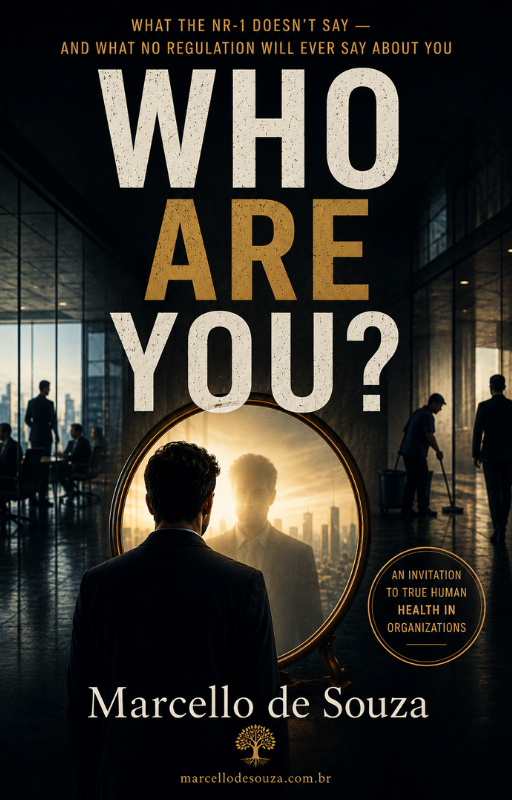
WHO ARE YOU?
For 28 years, I have been asking the same question. In boardrooms, in workshops with global leaders, and in conversations with people who never imagined anyone would ask them this.
Who are you?
And what comes next is always the same—regardless of title, salary, or the size of the badge.
A silence that says everything.
━━━━━━━━━━━━━━━━━━━━━━━
It is not shyness. It is something far more unsettling.
Most people who spend 50 or 60 hours a week inside an organization genuinely cannot answer that question without stumbling. They start with their job title. They hesitate. They try their academic background. Then they stop.
Fifteen centuries ago, Saint Augustine described this phenomenon while speaking about time:
“If no one asks me, I know. If I wish to explain it to someone who asks, I do not know.”
He was talking about time. Yet he described with remarkable precision what organizational culture has done to human identity.
You exist as long as no one questions you. But when someone asks who is doing all of this—the answer disappears.
━━━━━━━━━━━━━━━━━━━━━━━
Donald Winnicott called this the false self: the structure we build when the environment does not provide enough safety for the true self to exist.
He was talking about children. Yet the same mechanism repeats itself in every environment where conformity becomes the price of belonging—and most organizations are exactly that kind of environment.
The corporate false self agrees in the right meetings. Smiles when expected. Does not bring “personal problems” into work, as if a human being could be divided into separate parts.
It is competent. It gets promoted. And it is exhausted—not from the work itself, but from the constant effort of being a version of itself that is not real.
━━━━━━━━━━━━━━━━━━━━━━━
Self-esteem is not liking yourself. It is having access to yourself.
The person continues to perform. The metrics remain normal. Yet everything that made that person fully human has gradually been left behind. No one measures that.
NR-1 arrived as a mirror, not as bureaucracy. The State formally recognized the obvious: work environments can produce psychological suffering—and that responsibility belongs to the system, not only to the individual.
A psychosocial risk report that nobody will ever use may satisfy compliance requirements. Compliance is not care.
The difference lies in a question that very few leaders have the courage to ask:
What are we doing that is producing this suffering?
━━━━━━━━━━━━━━━━━━━━━━━
The closer you are to yourself, the more alive you feel. The further away you are, the more distractions you need to endure the life you have built.
This is not a KPI. It is the most accurate indicator of whether you are truly living—or merely functioning.
This is only the most visible part of the discussion. In the complete ebook, I explore the patterns of dysfunction that every organization reproduces without realizing it, as well as the five questions that help rebuild identity.
If it feels worthwhile to go beyond the surface, the link is in the comments.
When was the last time someone asked you who you are—and you answered without mentioning your job title?
marcellodesouza #marcellodesouzaoficial #coachingevoce #humandevelopment #behavioraldevelopment #NR1 #mentalhealthatwork #consciousleadership #organizationalculture #psychosocialrisks
Se isso fez sentido para você, existe um próximo passo possível
Algumas reflexões não terminam no conteúdo — elas continuam em forma de diálogo, aprofundamento ou sustentação de um trabalho contínuo.

QUEM VOCÊ É?

¿QUIÉN ERES TÚ?
Você pode gostar

SELF-DETERMINATION – THE SCIENCE OF MOTIVATION
THE SPACE BETWEEN US